



5
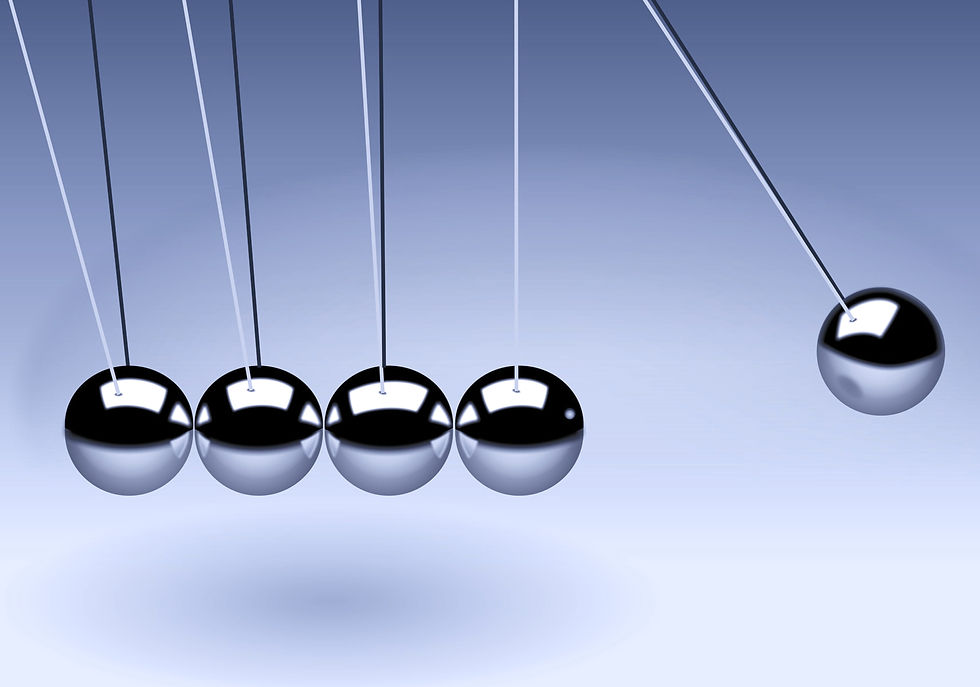
Our senses can perceive motion by seeing that things act on one another. Whatever moves is moved by something else. Consequently, there must be a First Mover that creates this chain reaction of motions. This is God. God sets all things in motion and gives them their potential.
Because nothing can cause itself, everything must have a cause or something that creates an effect on another thing. Without a first cause, there would be no others. Therefore, the First Cause is God.
Because objects in the world come into existence and pass out of it, it is possible for those objects to exist or not exist at any particular time. However, nothing can come from nothing. This means something must exist at all times. This is God.
There are different degrees of goodness in different things. Following the “Great Chain of Being,” which states there is a gradual increase in complexity, created objects move from unformed inorganic matter to biologically complex organisms. Therefore, there must be a being of the highest form of good. This perfect being is God.
All things have an order or arrangement that leads them to a particular goal. Because the order of the universe cannot be the result of chance, design and purpose must be at work. This implies divine intelligence on the part of the designer. This is God.
Thomas Aquinas, a 13th-century philosopher and theologian, is widely respected for his methodical and logical approach to proving the existence of God. In his seminal work, Summa Theologica, Aquinas outlined five arguments, often referred to as the "Five Ways," which demonstrate the rationality of belief in God.
These arguments are rooted in observation and reason rather than blind faith. For example, his argument from motion states that everything in motion must have been set in motion by something else, ultimately leading to an "unmoved mover," which he identifies as God. Similarly, his argument of causation explains that every effect has a cause, and tracing this chain of causes must logically end with an uncaused cause—God.
Others, like the argument from contingency, degrees of perfection, and the teleological argument (design), showcase Aquinas's ability to use logic and empirical observation to address profound metaphysical questions. His structured reasoning remains influential because it bridges faith and reason, making belief in God intellectually accessible rather than purely abstract or mystical.
...to know the Creator
ways...
Summa Theologica


more Ways to believe in
GOD
Let us count the ways

Naturally?
This video explores the incredible complexities found in the innumerable details of God's creation. It critically examines the masterful blend of aesthetics and functionality in nature where both beauty and engineering coexist seamlessly, especially on the micro level.
Mathematically?
This video is an excellent look into the incredible complexities found in the innumerable details of God's creation. It looks critically at the masterful blend of aesthetics and functionality in nature where both beauty and engineering coexist seamlessly, especially on the micro level.
Ben Sparks discusses the Mandelbrot set as a breathtaking mathematical marvel that reveals infinite complexity within simplicity. For me, it demonstrates how even a simple formula offers a glimpse into the grand creative power of mathematics in God's creation.
Scientifically?
This Capturing Christianity interview with Dr. Sy Gart illustrates how some scientists begin life as atheists or agnostics and over time find themselves questioning and even changing their beliefs based on all they have learned from their respective studies.
Theologically?
The Reverend and Doctor Alister McGrath gives an amazingly sound and logical argument for the existence of God. He notes that while science has given us much knowledge, it fails to answer many of life's big questions - most of all, why?
Let us count the ways
"For since the creation of the world God's invisible qualities - his eternal power and divine nature - have been clearly seen, being understood from what has been made, so that people are without excuse."
Romans 1:20
more ways
to believe in
GOD
Naturally?
This video is an excellent look into the incredible complexities found in the innumerable details of God's creation. It looks critically at the masterful blend of aesthetics and functionality in nature where both beauty and engineering coexist seamlessly, especially on the micro level.
Mathematically?
Scientifically?
Theologically?
This video is an excellent look into the incredible complexities found in the innumerable details of God's creation. It looks critically at the masterful blend of aesthetics and functionality in nature where both beauty and engineering coexist seamlessly, especially on the micro level.
This video explores the incredible complexities found in the innumerable details of God's creation. It critically examines the masterful blend of aesthetics and functionality in nature where both beauty and engineering coexist seamlessly, especially on the micro level.
Ben Sparks discusses the Mandelbrot set as a breathtaking mathematical marvel that reveals infinite complexity within simplicity. For me it demonstrates how even a simple formula offers a glimpse into the grand creative power of mathematics in God's creation.
This Capturing Christianity interview with Dr. Sy Gart illustrates how some scientists begin life as atheists or agnostics and over time find themselves questioning and even changing their beliefs based on all they have learned from their respective studies.
The Reverend and Doctor Alister McGrath gives an amazingly sound and logical argument for the existence of God. He notes that while science has given us much knowledge, it fails to answer many of life's big questions - most of all, why?
Let us count the ways


Truth
Menu

.faith
Ask, and it will be given to you; seek, and you will find; knock, and it will be opened to you. Matthew 7:7

